
Sometimes of American education:What does the phrase 'sometimes of American education' refer to?
Q: What does the phrase 'sometimes of American education' refer to?
A: The phrase is not a standard term but suggests the inconsistent or uneven aspects of American education. American education is highly decentralized, with each state and local district setting its own policies, curricula, and standards. This means that the quality and approach of schooling can vary dramatically from one region to another. 'Sometimes' captures this variability: sometimes schools excel, sometimes they struggle, depending on funding, community support, and leadership. The phrase may also point to how certain educational practices or reforms appear only intermittently, such as standardized testing movements or shifts between progressive and traditional teaching methods. In short, it reflects the fragmented and often unpredictable nature of how education is delivered across the United States, where no single national system ensures uniformity.
Q: Why is American education often described as inconsistent or uneven?
A: American education is frequently described as inconsistent because it lacks a centralized national curriculum. The U.S. Constitution leaves education primarily to the states, and local school boards wield significant power. As a result, what students learn and how they are taught can differ greatly between neighboring towns, let alone states. Funding disparities compound the issue: wealthier districts often have better resources, smaller classes, and more experienced teachers, while poorer districts struggle. 'Sometimes' conditions arise when reforms are adopted in some places but not others, or when federal initiatives like No Child Left Behind or Common Core are implemented unevenly. This patchwork system means that a student's educational experience depends heavily on zip code, creating both pockets of excellence and areas of serious need, which observers often sum up as the 'sometimes' quality of American schooling.
Q: How does the phrase 'sometimes of American education' highlight challenges in the U.S. school system?
A: The phrase highlights that American education delivers strong results in some contexts and falls short in others, often unpredictably. For example, some public schools rank among the best globally, while others face crumbling infrastructure and teacher shortages. 'Sometimes' also captures the stop-and-go nature of reform efforts: a district may adopt an innovative program, only to abandon it when leadership changes or funding dries up. Additionally, educational equity remains a persistent challenge, with achievement gaps based on race, income, and geography. The COVID-19 pandemic amplified these inconsistencies, as remote learning worked well in well-resourced communities but failed in others. By pointing to these fluctuations, the phrase underscores the need for more coherent, sustained policies that reduce the role of luck and location in determining a child's educational outcomes.
Q: In what ways do local control and funding affect the 'sometimes' nature of American education?
A: Local control and funding are central to why American education is often described as 'sometimes' effective. Because school districts rely heavily on local property taxes, funding varies enormously. Wealthy areas can offer advanced courses, technology, and extracurriculars, while low-income areas may lack basic supplies. This financial unevenness directly shapes the 'sometimes' quality: sometimes students get a world-class education, sometimes they don't. Moreover, local control means communities can tailor curricula to their values, but it also allows for wide disparities in standards and teacher qualifications. Federal and state governments try to equalize through grants and mandates, yet these efforts are often inconsistent or underfunded. The result is a system where educational opportunity depends on where a child lives, making the phrase a fitting shorthand for the unpredictable and unequal landscape of American schooling.
Words of experience
Common scenarios of "Sometimes of American education"
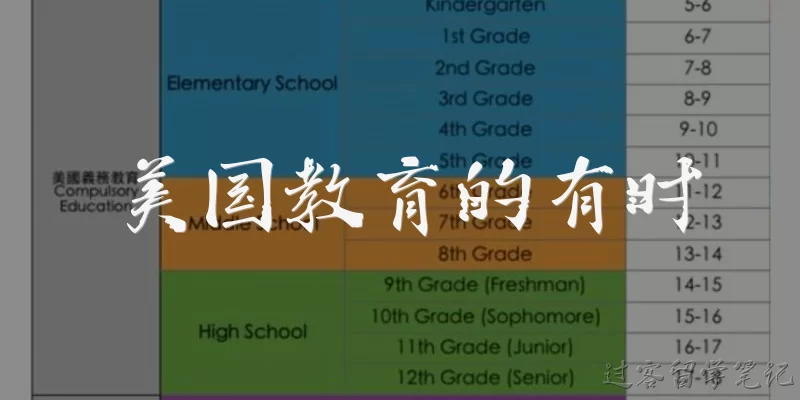
【Professor Davis】 Good morning, everyone. Today we're going to discuss some aspects of American education. Let's start with the structure: K-12 education is mandatory, but the quality can vary widely depending on the state and district.
【Student Li】 Professor, I've heard that American high schools offer a lot of electives. Is that true? How does that compare to other countries?
【Professor Davis】 Yes, that's true. American high schools typically offer a wide range of electives, from art to computer science. This flexibility allows students to explore interests, but it can also lead to uneven academic preparation.
【Student Maria】 I've read that standardized testing like the SAT is a big deal for college admissions. Is that still the case?
【Professor Davis】 It's still important, but many colleges have become test-optional in recent years. The pandemic accelerated that trend. However, standardized tests still play a role in scholarships and some admissions.
【Student Li】 What about the cost of college? I've heard it's very expensive in the US.
【Professor Davis】 Indeed, tuition costs have risen significantly. Many students take out loans, and student debt is a major issue. There are financial aid options, but the system is complex.
【Student Maria】 How does the American education system address diversity and inclusion?
【Professor Davis】 That's a broad topic. There are efforts like affirmative action, though its future is uncertain after recent Supreme Court decisions. Schools also implement diversity programs, but challenges remain.
【Student Li】 I've noticed that extracurricular activities are highly valued in US admissions. Why is that?
【Professor Davis】 American education emphasizes holistic development. Extracurriculars demonstrate leadership, teamwork, and passion. They help colleges assess a student's character beyond grades.
【Student Maria】 Is there a national curriculum? I'm confused because each state seems to have its own standards.
【Professor Davis】 There's no national curriculum. States set their own standards, though initiatives like Common Core attempted to create consistent benchmarks in math and English. It's a decentralized system.
【Student Li】 What are some common criticisms of American education?
【Professor Davis】 Critics point to inequities in funding, achievement gaps, and the emphasis on testing over critical thinking. Also, teacher shortages and burnout are growing concerns.
【Student Maria】 How does the US compare internationally in education?
【Professor Davis】 In international assessments like PISA, the US performs around average in math and science, but above average in reading. However, averages hide large disparities between states and demographics.
【Student Li】 I've heard about the 'achievement gap' between different racial and socioeconomic groups. Can you explain?
【Professor Davis】 The achievement gap refers to persistent disparities in academic performance between groups, often linked to socioeconomic factors, school funding, and systemic inequalities. It's a major challenge.
【Student Maria】 Are there any recent reforms or trends in American education?
【Professor Davis】 Yes, there's a growing focus on STEM education, personalized learning, and social-emotional learning. Also, the expansion of charter schools and school choice policies are debated.
【Student Li】 What role does technology play in American classrooms?
【Professor Davis】 Technology is increasingly integrated, from online learning platforms to interactive whiteboards. The pandemic highlighted both the potential and the digital divide.
【Student Maria】 How are teachers trained and certified in the US?
【Professor Davis】 Teacher certification varies by state. Typically, teachers need a bachelor's degree and a teaching credential, which involves coursework and student teaching. Alternative certification programs also exist.
【Student Li】 I've heard that American students have a lot of homework. Is that true?
【Professor Davis】 Homework load varies, but studies show that American students generally have moderate homework compared to some Asian countries. However, there's debate about its effectiveness.
【Student Maria】 What about special education? How is it handled?
【Professor Davis】 Special education is governed by federal law, ensuring students with disabilities receive free appropriate public education. Individualized Education Programs (IEPs) are developed for each eligible student.
【Student Li】 Thank you, Professor. This has been very informative.
【Professor Davis】 You're welcome. Remember, American education is complex and constantly evolving. Keep exploring and questioning.