Dutch Secondary School Chinese Exam:What is the Dutch Secondary School Chinese Exam?
Q: What is the Dutch Secondary School Chinese Exam?
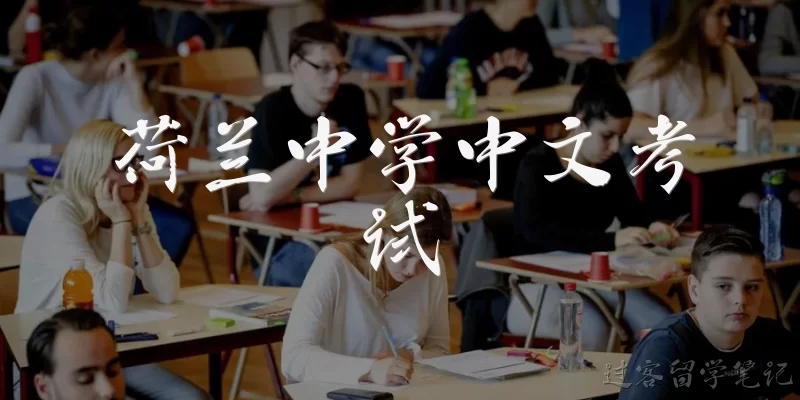
A: The Dutch Secondary School Chinese Exam is a standardized test for students in the Netherlands who study Chinese as a foreign language. It is part of the national curriculum and typically taken at the pre-university (VWO) or senior general secondary (HAVO) levels. The exam assesses reading, writing, listening, and sometimes speaking skills, with a focus on practical communication and cultural knowledge. It is administered by the College voor Toetsen en Examens (CvTE) and counts toward the final grade. The exam aims to certify proficiency at levels roughly equivalent to A2 to B1 on the CEFR scale, depending on the track.
Q: What topics are covered in the Dutch Secondary School Chinese Exam?
A: The Dutch Secondary School Chinese Exam covers a range of everyday topics such as greetings, family, school life, hobbies, food, travel, and Chinese culture. At the VWO level, topics may include social issues, technology, and environment. The exam tests vocabulary, grammar, and character recognition (both simplified and traditional, but simplified is more common). Listening sections use authentic audio, while reading uses short texts, emails, and notices. Writing tasks include short messages and essays. Cultural knowledge, such as festivals like Spring Festival and customs, is also integrated. The exam emphasizes practical communication over rote memorization.
Q: How is the Dutch Secondary School Chinese Exam structured?
A: The Dutch Secondary School Chinese Exam is typically divided into several components: reading, listening, and writing. For HAVO, the exam is often a single paper combining reading and writing, while VWO may have separate papers. Listening is usually tested via audio clips played in class or during the exam. The reading section includes multiple-choice and open-ended questions on short texts. Writing involves tasks like filling in forms, writing emails, or short essays. Speaking may be assessed through a school exam (schoolexamen) rather than the central exam. The central exam is set by CvTE and lasts about 2-3 hours, depending on the level.
Q: How can students prepare for the Dutch Secondary School Chinese Exam?
A: Students can prepare for the Dutch Secondary School Chinese Exam by using textbooks like Hanyu Jiao Cheng or specialized Dutch materials. Practice past papers from CvTE is essential to understand question types. Building vocabulary with HSK lists (levels 1-3) helps, as does practicing character writing and listening to Chinese podcasts or news. Speaking with native speakers via language exchanges improves fluency. Schools often offer mock exams and extra lessons. Additionally, reviewing cultural notes and common idioms is beneficial. Consistency is key: daily practice in reading, writing, listening, and speaking for at least 30 minutes will significantly boost performance.
Q: What is the difficulty level of the Dutch Secondary School Chinese Exam?
A: The Dutch Secondary School Chinese Exam is considered moderately difficult, roughly equivalent to CEFR A2 for HAVO and B1 for VWO. It requires knowledge of about 1,200 to 2,000 Chinese characters and basic grammar structures. While the exam tests practical skills, the listening section can be challenging due to native-speed speech. Writing tasks demand correct character usage and coherent sentences. Many students find the exam manageable with consistent study, but it is not for absolute beginners. Compared to other foreign language exams in the Netherlands, Chinese is often seen as more time-consuming due to characters, but the pass rates are generally good with proper preparation.
Dialogue about
Common scenarios of "Dutch Secondary School Chinese Exam"
【Student】 Hi, I'm a bit nervous about the Dutch secondary school Chinese exam. Can you tell me what to expect?
【Teacher】 Of course! The exam is designed to test your listening, speaking, reading, and writing skills in Chinese. It's part of the Dutch secondary education system, typically taken at the end of VMBO, HAVO, or VWO.
【Student】 Is it similar to other language exams like English or French?
【Teacher】 Yes, in structure. You'll have a central written exam and a school exam. The central exam usually tests reading and listening, while the school exam includes speaking and writing.
【Student】 What level of Chinese is required? I'm at HSK 3 level.
【Teacher】 That's about right. For HAVO, the expected level is around HSK 3, and for VWO, it might be closer to HSK 4. But it varies by school.
【Student】 What topics are usually covered in the exam?
【Teacher】 Common topics include daily life, school, family, hobbies, travel, and cultural aspects. You might need to read short texts, answer questions, and write a short essay.
【Student】 How is the speaking part assessed?
【Teacher】 You'll have a conversation with your teacher or an examiner. They'll assess your pronunciation, fluency, vocabulary, and grammar. You might need to role-play a situation or give a short presentation.
【Student】 That sounds challenging. Any tips for preparing?
【Teacher】 Practice listening to Chinese podcasts or watching videos. Read Chinese news for learners. And practice speaking with classmates or native speakers. Also, familiarize yourself with the exam format by doing past papers.
【Student】 Are there any specific characters or grammar points I should focus on?
【Teacher】 Make sure you know the 500 most common characters for HAVO, and around 800 for VWO. Grammar-wise, focus on sentence structures, measure words, and common conjunctions.
【Student】 How long is the exam?
【Teacher】 The central written exam is usually 90 minutes. The school exam varies, but speaking might be 15-20 minutes, and writing might be 60 minutes.
【Student】 Can I use a dictionary during the exam?
【Teacher】 Generally, no. But check with your school. Some schools allow a dictionary for the school exam part, but not for the central exam.
【Student】 What's the passing grade?
【Teacher】 A 5.5 or higher is usually passing, but it might depend on your school's requirements. The exam is graded on a scale of 1 to 10.
【Student】 Thanks! That's really helpful. I feel more confident now.
【Teacher】 You're welcome! Just keep practicing and you'll do fine. Good luck!