Should my friend take the postgraduate entrance exam or study abroad?:What are the key differences between taking the postgraduate entrance exam in China and studying abroad in 2026?
Q: What are the key differences between taking the postgraduate entrance exam in China and studying abroad in 2026?
A: In 2026, China's postgraduate entrance exam (kaoyan) remains highly competitive, with over 4.3 million applicants for roughly 1.3 million places, according to the Ministry of Education's 2026 national graduate enrollment notice. Studying abroad, by contrast, offers admission through holistic review rather than a single high-stakes test. Financially, kaoyan costs only a few hundred RMB in fees, while overseas master's programs typically range from 200,000 to 500,000 RMB per year, per 2026 reports from the Chinese Service Center for Scholarly Exchange (CSCSE). Time-wise, a domestic master's usually takes 2–3 years; many UK and Australian programs finish in one year. Your friend should weigh exam risk tolerance, budget, language readiness, and career goals. If they thrive under structured exams and want lower cost, kaoyan fits. If they seek international exposure, faster completion, and can afford it, studying abroad may be better.
Q: How does the 2026 job market in China view a domestic master's degree versus an overseas one?
A: According to the 2026 Chinese Overseas Returnees Employment Blue Book released by Zhaopin and the CSCSE, employers increasingly value practical skills over degree origin, but differences persist. Domestic master's graduates often have stronger local alumni networks and internship pipelines with state-owned enterprises and government agencies, which favor candidates familiar with domestic systems. Overseas returnees, however, are preferred in multinational corporations, foreign trade, consulting, and tech firms seeking cross-cultural communication and English proficiency. Notably, the 2026 Blue Book shows returnee starting salaries averaging about 15% higher in first-tier cities, though the gap narrows after three years. Fields like AI, renewable energy, and biomedicine actively recruit both groups. Your friend should consider target industries: if aiming for civil service or academia in China, a domestic degree may be smoother; if targeting global firms or startups with international clients, overseas study could provide an edge.
Q: What are the application timelines and requirements for studying abroad versus the postgraduate entrance exam in 2026?
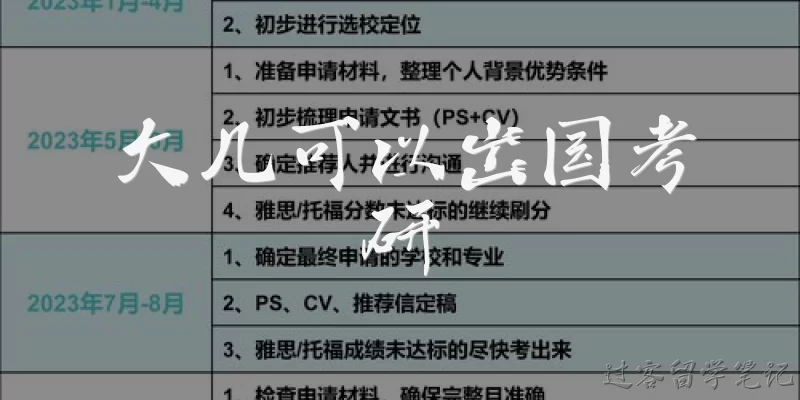
A: For the 2026 postgraduate entrance exam, registration typically opens in October 2025, with the exam held in late December 2025 and results in February 2026, followed by interviews in March–April, per the Ministry of Education's 2026 schedule. Preparation usually requires 6–12 months of intensive study in politics, English, and major subjects. Studying abroad involves rolling applications: for Fall 2026 intake, students apply between September 2025 and March 2026, submitting transcripts, language scores (IELTS/TOEFL, often 6.5+ or 90+), recommendation letters, and personal statements. Some programs require GRE/GMAT. According to the 2026 CSCSE annual report, over 700,000 Chinese students studied abroad in 2025, with the UK, US, Australia, and Hong Kong as top destinations. Your friend should assess whether they can handle simultaneous preparation or must choose one path due to time and energy constraints.
Q: What financial and personal factors should my friend consider when choosing between kaoyan and studying abroad in 2026?
A: Financially, the 2026 Ministry of Education data shows domestic master's tuition ranges from 8,000 to 30,000 RMB per year, with living costs of 1,500–3,000 RMB monthly, plus scholarships covering up to 100% for top students. Studying abroad costs far more: 2026 CSCSE figures indicate average annual expenses of 250,000 RMB in the UK, 350,000 RMB in the US, and 200,000 RMB in Australia, though scholarships and part-time work (limited by visa rules) can offset some. Personally, kaoyan demands exam resilience and offers a predictable domestic career track. Studying abroad builds independence, language fluency, and global networks but risks reverse culture shock and credential recognition issues in some Chinese public sectors. Your friend should evaluate family financial capacity, emotional readiness for living abroad, and long-term residency or career plans in China versus overseas. A honest self-assessment of risk tolerance and goals is essential before deciding.
Dialogue about
Common scenarios of "Should my friend take the postgraduate entrance exam or study abroad?"
【Li Ming】 Hey, I heard your friend Zhang Wei is confused about whether to take the postgraduate entrance exam or study abroad. What's his situation?
【Wang Fang】 Yeah, he's a senior majoring in computer science. He has a decent GPA, but he's not sure if he should stay in China for grad school or go abroad.
【Li Ming】 I see. What are his main concerns?
【Wang Fang】 He's worried about the cost of studying abroad and the uncertainty of getting into a good program. Also, he's not sure if an overseas degree will give him an edge in the job market.
【Li Ming】 That's understandable. Has he considered the time factor? Studying abroad usually takes one to two years, while the postgraduate entrance exam in China is also competitive.
【Wang Fang】 He has. He thinks studying abroad might be faster if he can get into a one-year master's program, but the exam in China is more familiar.
【Li Ming】 What about his language skills? Does he have IELTS or TOEFL scores?
【Wang Fang】 He took IELTS last year and got 6.5, but he might need a higher score for top universities.
【Li Ming】 That's a good start. Maybe he should retake it if he aims for better schools. What about his financial situation?
【Wang Fang】 His family can support him partially, but he might need a scholarship. Studying in China is much cheaper.
【Li Ming】 True. Also, consider the cultural experience and networking opportunities abroad. That can be valuable.
【Wang Fang】 He's aware of that. But he's also worried about being away from home and the pandemic situation.
【Li Ming】 The pandemic is a valid concern. Maybe he should check the current policies of target countries.
【Wang Fang】 He's looking into that. Another thing: he's not sure if he wants to pursue a research career or go into industry.
【Li Ming】 That's crucial. If he wants to do research, a master's or PhD abroad might be better. For industry, a Chinese master's could be sufficient.
【Wang Fang】 He's leaning towards industry, but he thinks an overseas degree might open more doors internationally.
【Li Ming】 It could, but it also depends on the country's job market and visa policies. Has he talked to alumni?
【Wang Fang】 He's planning to. I told him to reach out to seniors who have done both.
【Li Ming】 That's a good idea. Also, he should consider the application timeline. Studying abroad requires early preparation.
【Wang Fang】 Exactly. He needs to decide soon because the deadlines are approaching. I'll share all these points with him.